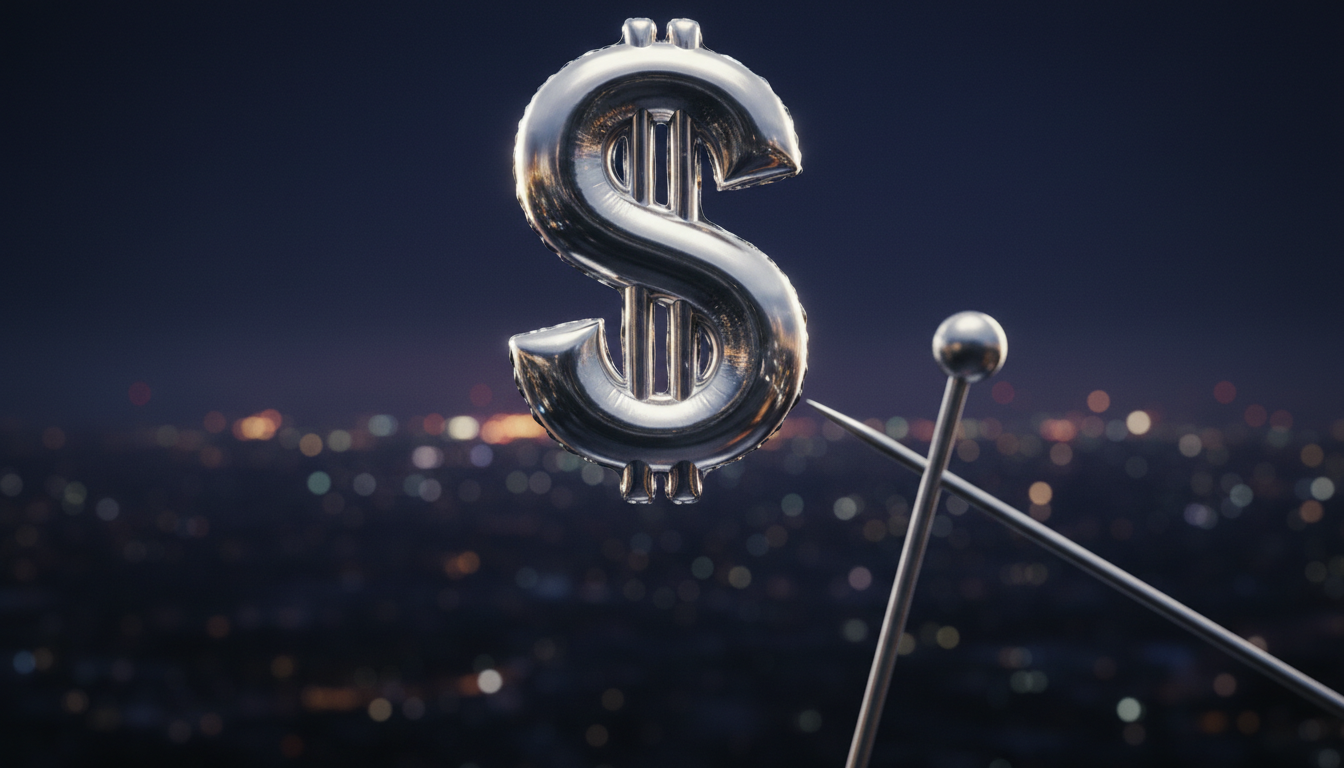
OpenAI set out to raise around $30 billion at a valuation of roughly $1.25 trillion, a pre-IPO round led by investors from the United Arab Emirates alongside Coatue. To put a trillion-and-a-quarter in context: that is more than the entire annual economic output of most countries on earth, assigned to a company that, by its own projections, will burn cash for years. It is a bold strategy. Let us see how it plays out.
The number is already moving the wrong way
Here is the part the headline valuation hides. The round is not going quite to plan. As of 10 November, reporting suggests OpenAI had closed only the first roughly $11 billion of it, with the full raise now expected to land nearer $20 billion than the $30 billion originally sought. The $1.4 trillion figure floated back in September has already been trimmed to $1.25 trillion. The direction of travel is down, even as the headline number stays eye-watering.
For comparison, OpenAI’s last completed round closed in March at $122 billion, on an $852 billion valuation. So in eight months the company’s paper value has climbed by roughly $400 billion while its ability to actually fill a funding round has, if anything, got harder. That is a strange pair of facts to hold at once.
Why it matters beyond OpenAI
The whole AI market is leaning on numbers like these. An enormous share of global data-centre and chip spending is underpinned by the assumption that OpenAI and a handful of peers will grow into valuations with very little revenue beneath them yet. When the flagship name has to work harder to raise less than it wanted, at a valuation it has already reduced, that is a signal worth watching, whatever your view on the technology. A shrinking round does not equal a crash. Read it as a thermostat, and the reading has dipped.
What this means
None of this is advice to buy or sell anything, and the terms are press-reported rather than officially confirmed. But if you are trying to gauge the temperature of the AI boom, “the most important startup on earth wanted $30 billion at $1.4 trillion and is closing nearer $20 billion at $1.25 trillion” is a more honest headline than the one on the pitch deck. Bold strategy indeed.
Not investment advice. Sources: CNBC; Bloomberg via TradingView; TechCrunch; Reading Unicorns, November 2026.