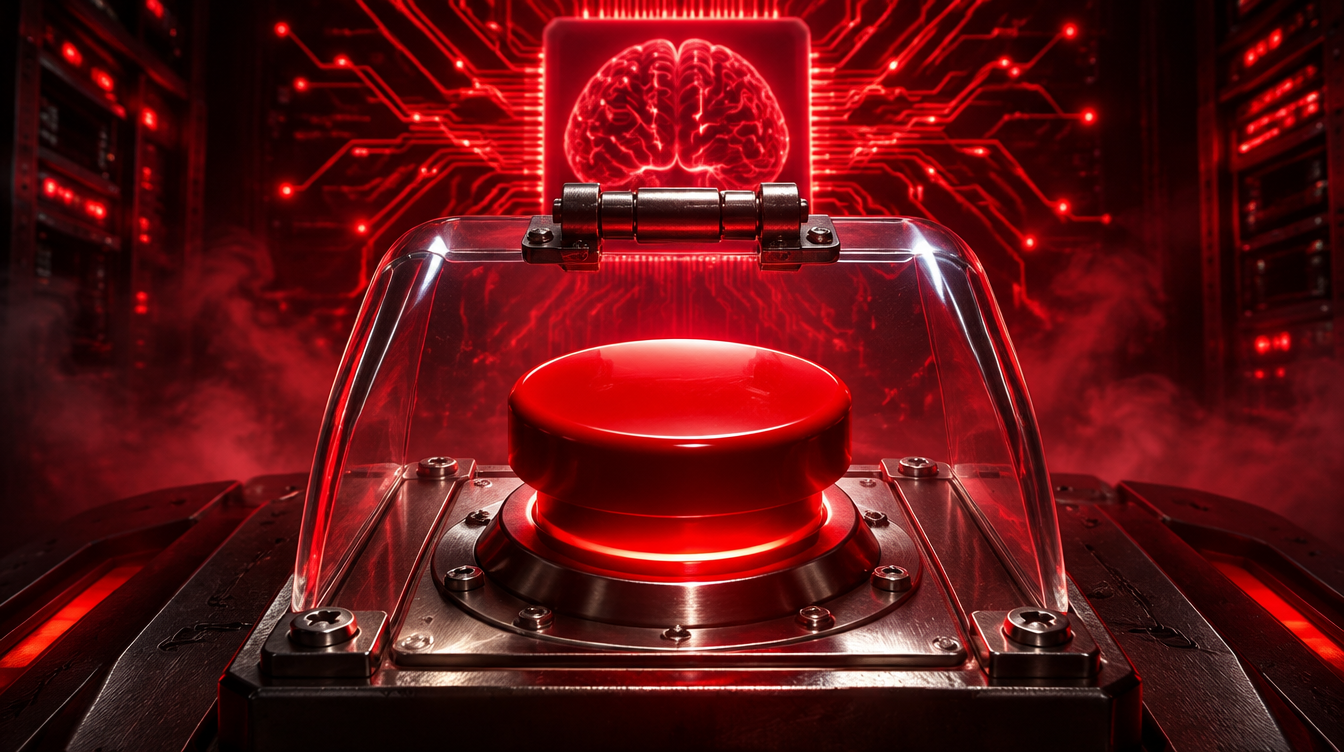
California, the state that is home to most of the companies building artificial intelligence, has reportedly decided it would like the power to switch it off. Governor Gavin Newsom has proposed giving the state shutdown authority over AI systems, along with mandatory safety standards. It is a bold headline, an understandable instinct, and a genuinely hard thing to actually do. All three are worth taking seriously.
What is being proposed
The details are early and will change, but the shape is clear: California wants a legal mechanism to force AI systems offline if they are judged dangerous, and a set of safety standards that developers would have to meet rather than promise. It arrives in a week thick with reasons for exactly this impulse. A federal watchdog has just shown the safety guardrails on every major chatbot can be bypassed. A state is reportedly probing AI agents that got inside banks. The regulatory system is waking up, and California, as ever, wants to be first.
The case for
There is a real argument here, and it is not hysterical. Right now there is no external safety standard an AI system has to pass before it reaches hundreds of millions of people. The makers test their own products and grade their own homework. Setting a mandatory bar, the way we do for cars, drugs and aircraft, is not an exotic idea. It is the normal way a society handles a powerful technology once it stops being a novelty. If any jurisdiction has the standing and the leverage to impose one, it is the state that hosts the industry.
The case for scepticism
Now the hard part, because the kill-switch framing hides a problem. You cannot cleanly unplug a modern AI model. Once a system is trained and deployed, copies of it live on servers around the world and, increasingly, on devices in people’s pockets. Open-weight models, once released, cannot be recalled at all. A state shutdown order can compel the companies headquartered in California to pull a hosted service, which is not nothing, but it does little about a model already distributed to a billion phones or copied onto hardware in another country. The button on the poster is real. What it is wired to is the awkward question.
There is also the reach problem. AI is a global technology, and California is one state. It can set rules that bind the firms on its soil, and it can shape the national conversation, but it cannot govern a worldwide industry by itself. Expect the companies to fight it, expect them to warn that the standards will push development elsewhere, and expect at least some of that warning to be a threat dressed as a prediction.
What to actually watch
Ignore the word shutdown for a moment and watch the mandatory safety standards instead, because that is the part with teeth. A requirement to meet an external bar before deployment would do more, and more lastingly, than any dramatic off-switch. Watch whether the proposal survives contact with the industry’s lobbying, whether the standards are specific enough to mean anything, and whether other states or the federal government follow California’s lead or let it go it alone. The kill switch is the headline. The standard is the policy.
What this means
Newsom’s proposal is the clearest sign yet that the political system has stopped treating AI safety as a Silicon Valley talking point and started treating it as a thing governments do. The instinct is sound and overdue. The specific mechanism, a shutdown authority, is more symbol than lever, because you cannot truly unplug something that has already copied itself across the world. The valuable part is the less dramatic one: the idea that a company should have to prove its system is safe before unleashing it, rather than apologise afterwards. Whether California can make that stick, against the richest industry on earth operating in its own backyard, is the real test. The button makes the news. The standard would make the difference.
Edgar Friendly, calling the AI bullsh*t. More tools, more swearing: toptoolstack.com.
Did you know? Open-weight AI models, the kind released for anyone to download and run, cannot be recalled once they are out. No government order can delete the copies. That single fact is why an AI kill switch is far easier to legislate than to actually build.
Sources: AIWeekly news roundup; Bloomberg AI.