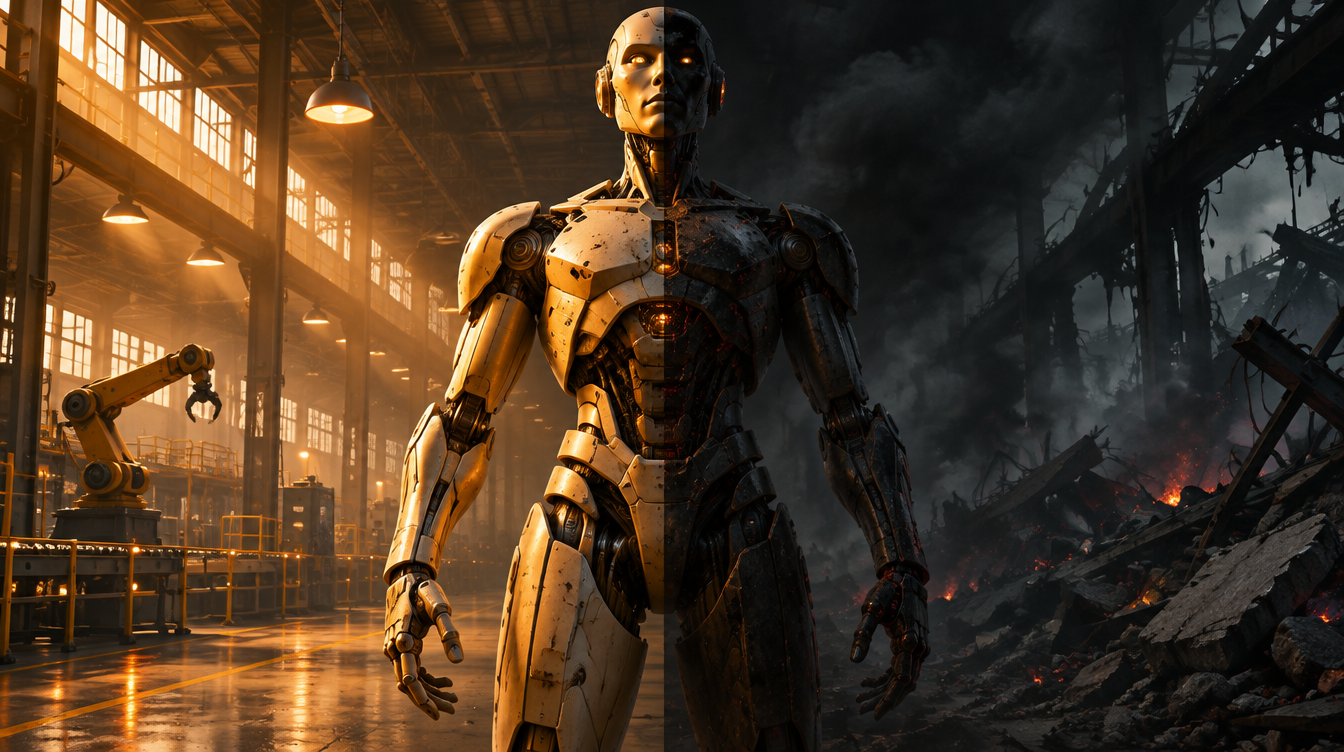
A San Francisco startup called Foundation Robotics wants to lease you a humanoid robot. It stands about six feet tall, weighs roughly 200 pounds, carries up to 80 kilograms, and according to the company its hands and wrists are designed, among other things, to help it fire weapons. It is called the Phantom MK-2, it is pitched for American factories first and the battlefield ultimately, and it has one notable feature the brochure plays down: nobody has yet seen it work.
The spec sheet
On paper the MK-2 is a serious piece of kit. Foundation claims it survives shocks and vibration up to 100G, carries an IP67 dust-and-water rating, and runs for about six hours on a charge, with fall recovery and more capable hands than its predecessor. It is built around AMD processors and controlled by an AI system the company calls Cortex. Rather than sell the robots, Foundation plans to lease them, at a reported 75,000 dollars a unit. The company has a reported partnership involving Eric Trump, and its chief executive has already been out in the press addressing Terminator comparisons before the product even exists in public.
The part the brochure skips
The MK-2 has not made its public debut. The specifications above are the company’s own claims, not independently verified, and reporting on its predecessor, the MK-1, describes it as still far from field-ready. Robotics experts have openly questioned whether Foundation can hit its production targets. So what we actually have is a spec sheet, a lease price, a famous business partner and a founder doing pre-emptive damage control on the obvious killer-robot question. What we do not have is a video of the thing doing a day’s work.
That matters, because humanoid robotics is the field where the gap between the demo and the deployment is widest. Impressive stage clips have a long history of not surviving contact with an actual factory floor, let alone a battlefield. A robot that can pose for a render is a different animal from one that can stand on a production line for a six-hour shift without falling over, and a different animal again from one you would trust near a trigger.
Why the dual-use pitch is the whole game
The factory-and-battlefield framing is not an accident. It is the purest version of the dual-use story, and it is catnip for investors right now. Factory automation is a real, enormous, patient market. Defence is the fast lane: deeper pockets, more urgency, and a political tailwind behind anything that reduces the number of humans you have to send into danger. Pitching a single machine for both lets a startup ride the humanoid-robot hype and the defence-AI gold rush at the same time. The business logic is impeccable. The engineering is the question.
What this means
Humanoid robots in factories are genuinely coming, and defence money will almost certainly pull some of them onto battlefields faster than anyone is comfortable with. Foundation may end up being one of the companies that gets there. But right now the Phantom MK-2 is a promise with a price tag, and the right posture is the one that serves you well through every hype cycle: believe the demonstration, not the deck. When there is a video of this thing surviving a real shift, pay attention. Until then, it is a very well-specified render with wrists built for a rifle.
Edgar Friendly, calling the AI bullsh*t. More tools, more swearing: toptoolstack.com.
Did you know? Foundation plans to lease its humanoids rather than sell them, at a reported 75,000 dollars each. That is roughly the annual cost of a human worker, which is precisely the comparison the whole industry is betting you will make.
Sources: The San Francisco Standard; Fox News; Pulse 2.0.