The Jensen Huang scandal has been covered to death for all the lurid reasons. Underneath the affair and the spy-plot headlines sits a far more consequential story that deserves its own airtime: the centrepiece of American technology policy, the effort to deny China the world’s best AI chips, has a legal loophole you could park a data centre in. Because someone has.
The ban, and the side door
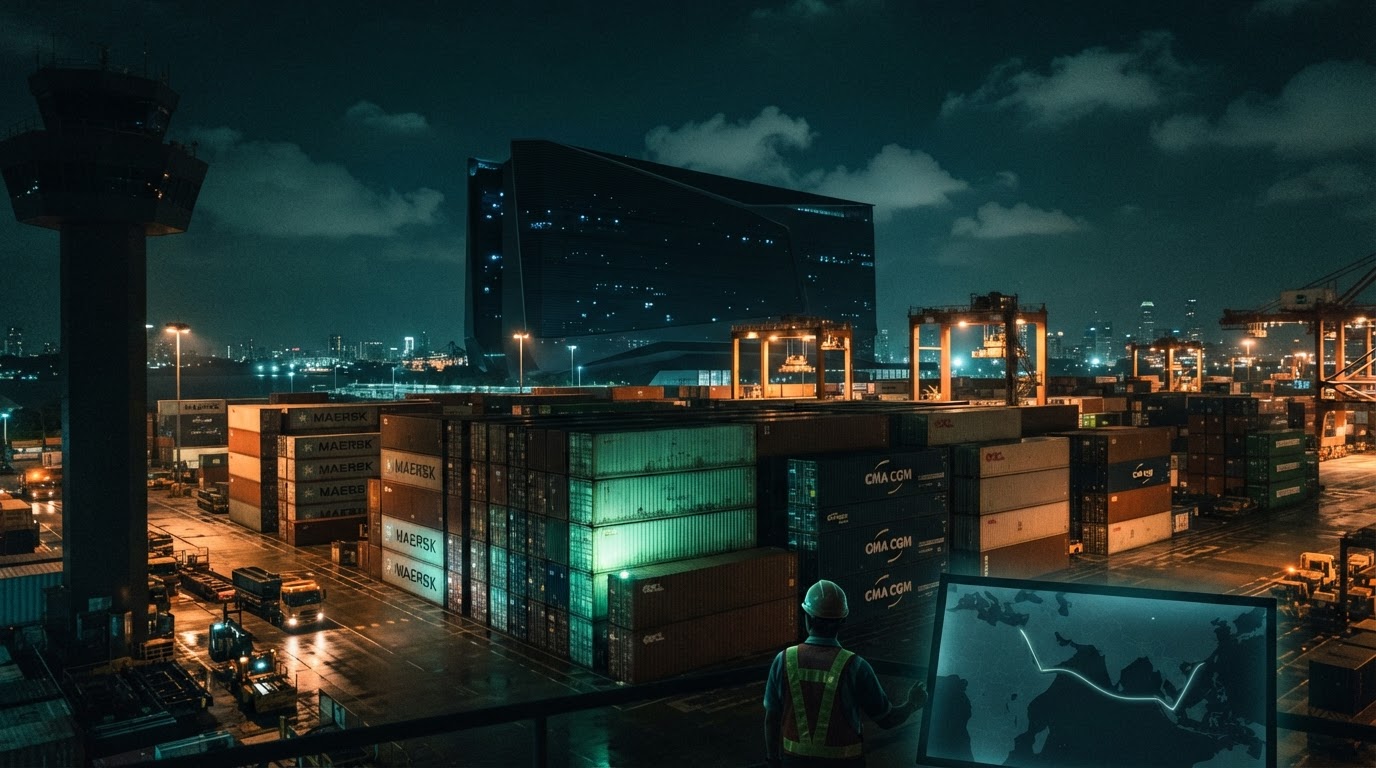
US export controls prohibit selling Nvidia’s most advanced AI accelerators to Chinese firms. The intent is simple: slow China’s AI progress by starving it of the hardware. The workaround is just as simple. You do not sell the chips to China. You install them in a data centre somewhere the rules allow, Singapore or Malaysia, and then you rent the computing power to Chinese customers over the internet. The chips never cross a Chinese border. The compute does. Fortune reports that renting out chips already housed in Singapore and Malaysian data centres is legal under the current rules, which is the whole game.
Enter Megaspeed
The company that put this on the front page is Megaspeed, a Singapore operation that became a major buyer of Nvidia chips, run by Alice Huang, the woman at the centre of the Jensen Huang affair. According to reporting on a Wall Street Journal investigation, Megaspeed coordinated the delivery of somewhere between 7.5 and 12 billion dollars of advanced semiconductors to Chinese firms between early 2024 and mid-2025, the exact figure depending on which outlet you read. The United States and Singapore are now both investigating Megaspeed over allegations that it rerouted Nvidia AI chips to China in violation of export restrictions.
Two caveats matter, because the tabloid version blurs them. Investigators have not established whether Alice Huang was acting as an agent of the Chinese government, and the Justice Department has not determined whether the relationship at the heart of Jensen Huang’s downfall was tied to espionage at all. And nothing in the reporting accuses Jensen Huang himself of wrongdoing in the chip routing. The scandal is what dragged the loophole into the light. The loophole is the actual story.
Why this should worry investors and hawks alike
The entire bull case for export controls assumes the chips can be kept out of Chinese hands. The compute-rental loophole breaks that assumption cleanly. Controls written for a world of physical goods, where you can inspect a crate at a port, struggle in a world where the valuable thing is a service delivered down a fibre-optic cable. You cannot seize a rented GPU-hour at customs.
For anyone pricing the chip war into a view on Nvidia, this cuts both ways. The demand is real, Chinese firms clearly want the compute and are paying for it, which is good for the people who sell and host the chips. But it also means the controls leak, which invites exactly the kind of investigation, tightening and political blowback now landing on Singapore and on Nvidia’s web of customers. A policy that can be beaten this easily tends to get rewritten, and rewrites are where the risk lives.
What this means
Forget the affair for a second. The durable lesson is that the West’s flagship method for slowing Chinese AI can be sidestepped by anyone willing to leave the chips offshore and sell the hours. That is not a scandal about one executive. It is a structural hole in the strategy, and now that it is on the record, the pressure to close it, and the disruption that will cause, is only going to build.
Not investment advice. Do your own research.
Edgar Friendly, calling the AI bullsh*t. More tools, more swearing: toptoolstack.com.
Did you know? Under the current rules, a Chinese company barred from buying an Nvidia chip can legally rent that exact chip’s computing power, as long as the physical hardware stays in a data centre outside China. The export ban stops the box, not the bytes.
Sources: Fortune; Yahoo News; CNN.