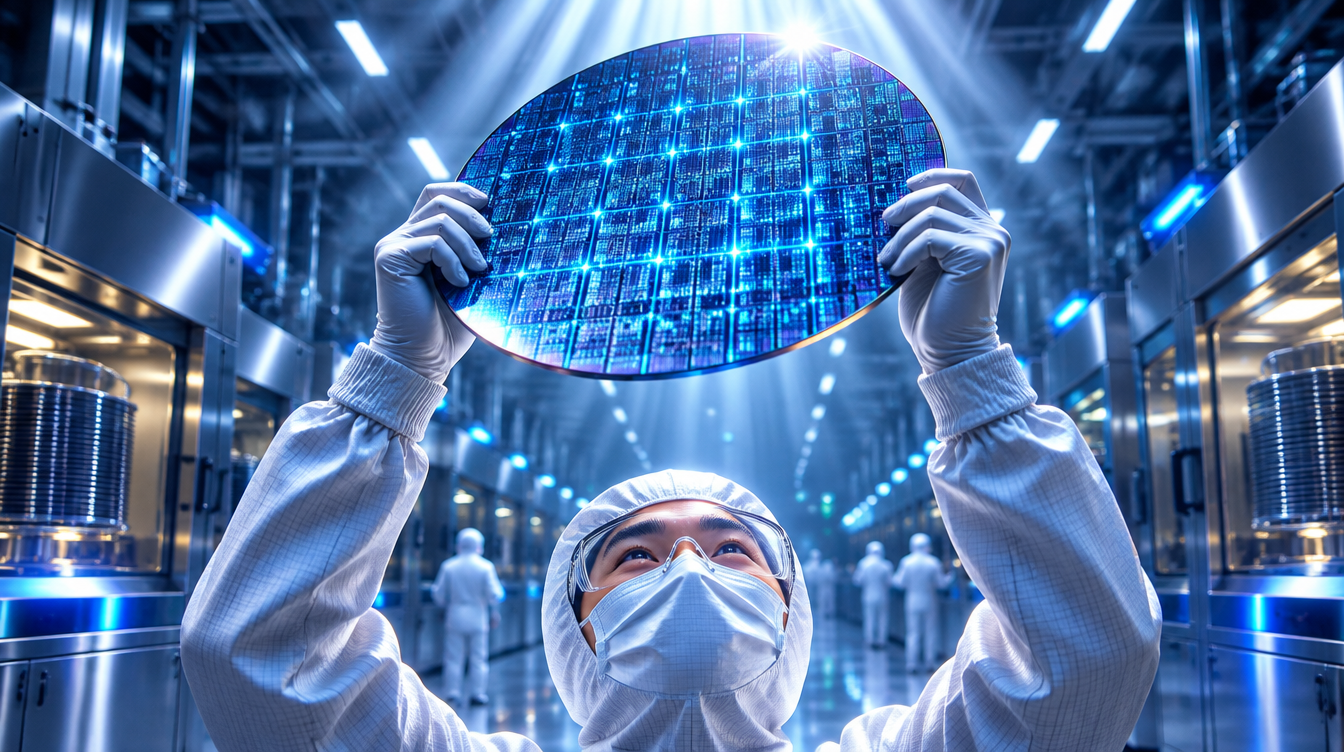
While everyone watches Nvidia print money and Anthropic ring the Nasdaq bell, the most consequential chip story of the week belongs to the industry’s designated patient. Intel has reportedly signed its first outside customer for its new 18A-P manufacturing process, and says yields on the node have reached around 70 per cent. For a company that has spent years being written off, those are two of the most important numbers it could possibly produce.
Why this is a big deal for a company most people had given up on
A little context, because the significance is easy to miss if you do not follow chips. For most of the past decade, Intel lost the manufacturing crown it once owned to Taiwan’s TSMC, which now makes the most advanced chips for almost everyone, Nvidia and Apple included. Intel’s enormous, expensive bet to claw back was to open its factories to outside customers as a foundry, and to leapfrog on a new generation of process technology, of which 18A and its enhanced sibling 18A-P are the centrepiece. That bet has been bleeding cash and credibility. The two things it desperately needed to show were that someone other than Intel would trust the new process with their chips, and that Intel could actually manufacture on it without a ruinous share of the wafers coming out broken.
A first external customer answers the first question. A roughly 70 per cent yield, a healthy figure for a node this new, starts to answer the second. Neither is a victory lap. Together they are the first real evidence that the comeback is more than a press release.
The caveats, because there are always caveats
Temper it. The yield figure is Intel’s own, and chipmakers are not famous for understating their fabs. The customer is unnamed, so we cannot judge how big or committed the order is. And even a revived Intel remains far behind TSMC in scale, in the number of advanced customers, and in the trust built over a decade of delivering. One node, one customer and one self-reported number do not undo years of losing. They do, however, change the question from whether Intel is finished to whether Intel is back, and that is a different and far more interesting debate than the one the company was losing six months ago.
Why it matters beyond Intel’s share price
Here is the part that connects to everything else on this site this week. The United States spends enormous political energy worrying about chip sovereignty, about the fact that the most advanced semiconductors on earth, the ones the entire AI boom runs on, are made on an island that China claims. Every export rule, every China approval, every panic about Taiwan traces back to that single dependency. Intel’s foundry is the one piece of the whole puzzle that would actually reduce it, by making leading-edge chips on American soil for other American companies. That is why this is not only an investor story. A working 18A-P is a strategic asset, and a first customer on it is a national-security data point dressed as an earnings footnote.
Bull, bear, neutral
Bull: the two hardest proof points, an external customer and a respectable yield, are finally arriving together. If the trend holds, Intel becomes a genuine second source to TSMC, and the market will pay a lot for that.
Bear: one unnamed customer and a self-reported yield are thin evidence against years of missed targets. TSMC is not standing still, and Intel has cried comeback before.
Neutral: watch for named, volume customers, for yield figures confirmed by those customers rather than by Intel, and for whether 18A-P ships in real products on schedule. Those are the signals that separate a turnaround from a talking point.
Not investment advice. Reported figures are company-stated and unverified. Do your own research.
What this means
The flashy AI stories this week were about trillion-dollar valuations and chatbots behaving badly. This one is about a wafer coming out of an American factory with most of its chips intact, for a customer who is not Intel. It is less glamorous and, for the long-run question of who actually makes the world’s most important technology, arguably more important. The patient sat up. Whether it gets out of bed is the story of 2027.
Edgar Friendly, calling the AI bullsh*t. More tools, more swearing: toptoolstack.com.
Did you know? Yield, the share of chips on a wafer that come out working, is the number that decides whether a chip factory makes money or burns it. A few percentage points can be the difference between a profitable node and a financial disaster, which is why a 70 per cent figure on a brand-new process is a bigger deal than it sounds.
Sources: AIWeekly news roundup; Bloomberg AI.