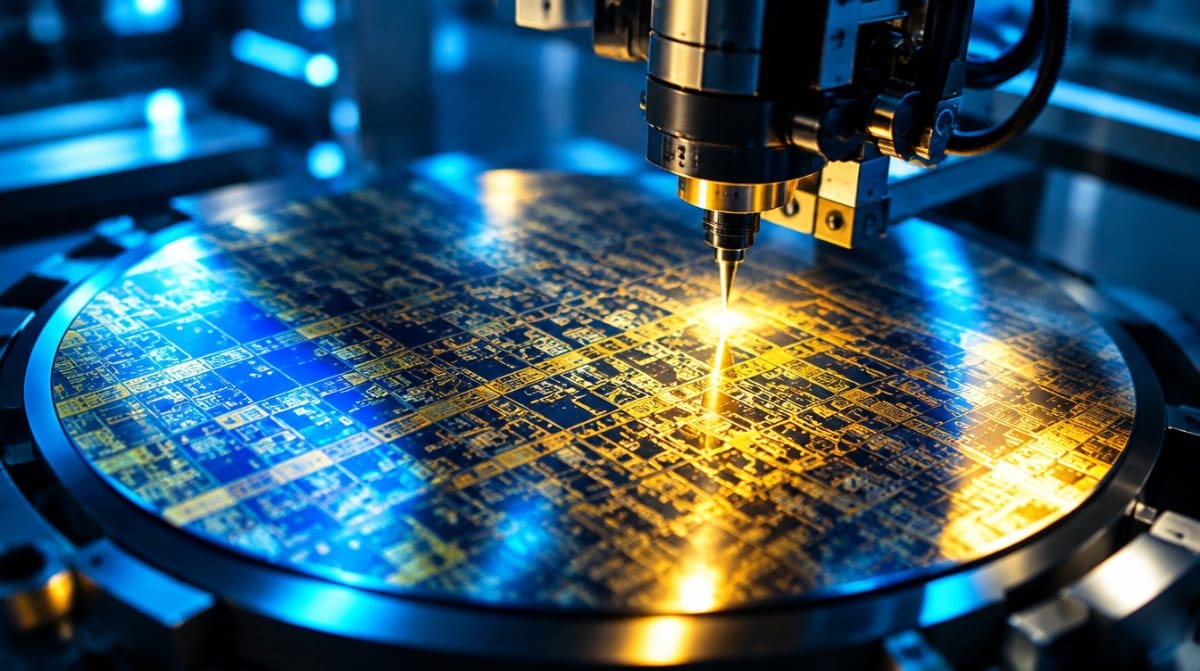
There is a tidy loop forming in the AI industry, and it tightened this week. OpenAI and Synopsys announced a multi-year partnership and a specialised model, GPT-Synopsys, trained to operate Synopsys’s chip-design software and automate large parts of the semiconductor design process. In plain terms: AI is now being pointed at the job of designing the chips that run AI.
What it actually does
Synopsys makes the electronic design automation, or EDA, software that engineers use to lay out and verify modern chips. It is dense, specialist work. GPT-Synopsys is trained specifically to drive those tools, integrated with the Synopsys.ai suite and its Autopilot platform, and runs on OpenAI-hosted infrastructure. The companies say early engagements with leading chip customers are already underway, which suggests this is aimed at production use rather than a demo.
Why this is a big deal
Chip design is one of the hardest, slowest, most expensive engineering tasks on the planet, and the supply of people who can do it well is tiny. Compress that cycle even modestly and you speed up the entire hardware roadmap the AI boom depends on. It also deepens a dependency: the frontier labs need ever more advanced silicon, and now one of them is selling the tooling to help design it. The loop of AI improving the hardware that improves AI is exactly the kind of compounding the industry has been promising.
The sober read
Specialised models like this tend to be narrower and more reliable than general chatbots, because the task is constrained and the correctness is checkable. That is the good news. The risk is concentration: more of the semiconductor pipeline routed through a handful of AI platforms, with the usual questions about lock-in, pricing power and what happens when the tool that designs your chips has an off day. For now, it is a genuinely useful piece of industrial automation rather than a gimmick.
What this means
Watch for this pattern spreading into other hard, specialist domains: drug design, materials, advanced manufacturing. The generic chatbot was the demo. Narrow models welded to professional software, sold to the few companies that do the hardest work, are where the real enterprise money is heading.
Sources: OpenAI and Synopsys (partnership announcement); contemporaneous reporting, early October 2026.