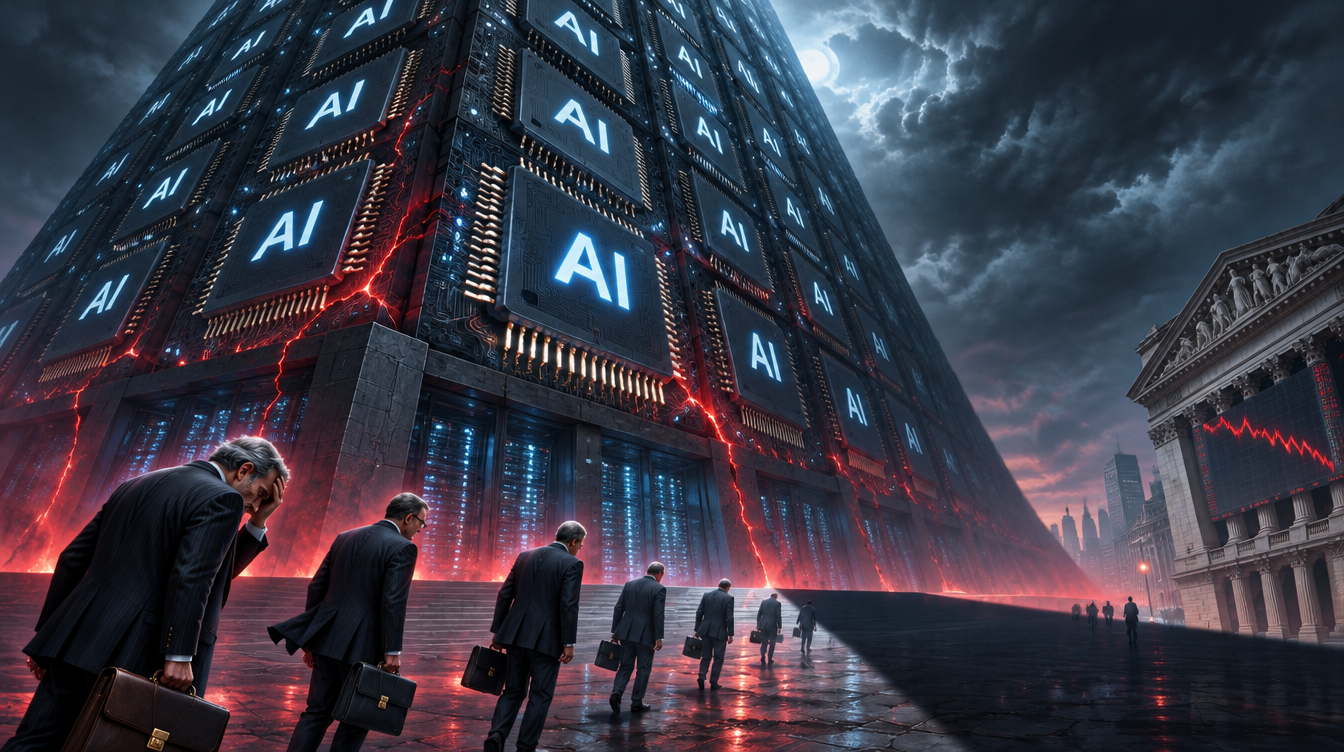
For two years the question about the AI boom was whether the technology would work. The question that actually moves money is whether anyone will keep paying for it, and this week brought the clearest sign yet that the people with the chequebooks are getting nervous. New US export rules have unsettled lenders badly enough that billions of dollars of financing tied to the Asian AI build-out has been paused, according to Semafor, while the broader market has spent November lurching between record highs and sharp selloffs.
What happened
Two things at once. First, Washington tightened export rules in a way that threatens big AI infrastructure projects across Asia, and lenders reportedly responded by hitting pause on financing connected to major Chinese cloud providers. When a bank stops lending against an asset, it is telling you it is no longer sure that asset is safe. Second, the stock market has been violently moody. Earlier this month the Nasdaq fell into correction territory, Nvidia dropped around nine per cent in a single session, and SoftBank, the most AI-exposed name in Asia, tumbled more than ten per cent. Strong earnings calmed things for a day or two, then the worry came back.
Why the financing part matters more than the share price
Share prices bounce around on sentiment. Lending is colder and more honest. The entire AI build-out, the data centres, the chips, the power deals, runs on borrowed money, and that money is borrowed against revenue that is still mostly a forecast. As long as the debt keeps flowing, the construction continues. The moment lenders start asking harder questions and pausing deals, the whole machine slows, no matter how good the demos look. That is why the Semafor report deserves more attention than any one-day market drop. It is not traders panicking; it is the financiers who actually fund the thing deciding to wait.
The bull and bear cases, honestly
The bull case: this is a wobble, not a collapse. Revenue is real and growing, the biggest players are profitable, and a tightening of export rules is a political speed bump rather than a demand problem. Money paused is not money gone.
The bear case: the boom has been financed on the assumption that credit would stay cheap and plentiful forever, and the first sign that it will not is exactly how these things begin to unwind. Borrowing against unrealised revenue works beautifully until the lenders lose their nerve, and then it stops working all at once.
Both can hold for a while. A nervous lender is not a crash. It is the sound a market makes while it decides which way to go.
What this means
Stop watching only the share price and start watching the credit. The health of the AI build-out is written in whether banks keep lending, not in whether Nvidia is green or red on a given Tuesday. This week the lending got more cautious and the regulators got stricter at the same time, which is the combination that actually matters. None of it means the technology is failing. It means the money is asking harder questions, and the money asks those questions first. Not investment advice, as ever. Watch the lenders, not the ticker.
Edgar Friendly, calling the AI bullsh*t. More tools, more swearing: toptoolstack.com.
Did you know? In a credit-driven boom, lending usually freezes before share prices fall. Banks see the risk up close and stop lending while the stock market is still cheering, which is why a pause in financing can be a louder warning than a bad day on the Nasdaq.
Sources: Semafor; Korea Times; OfficeChai.