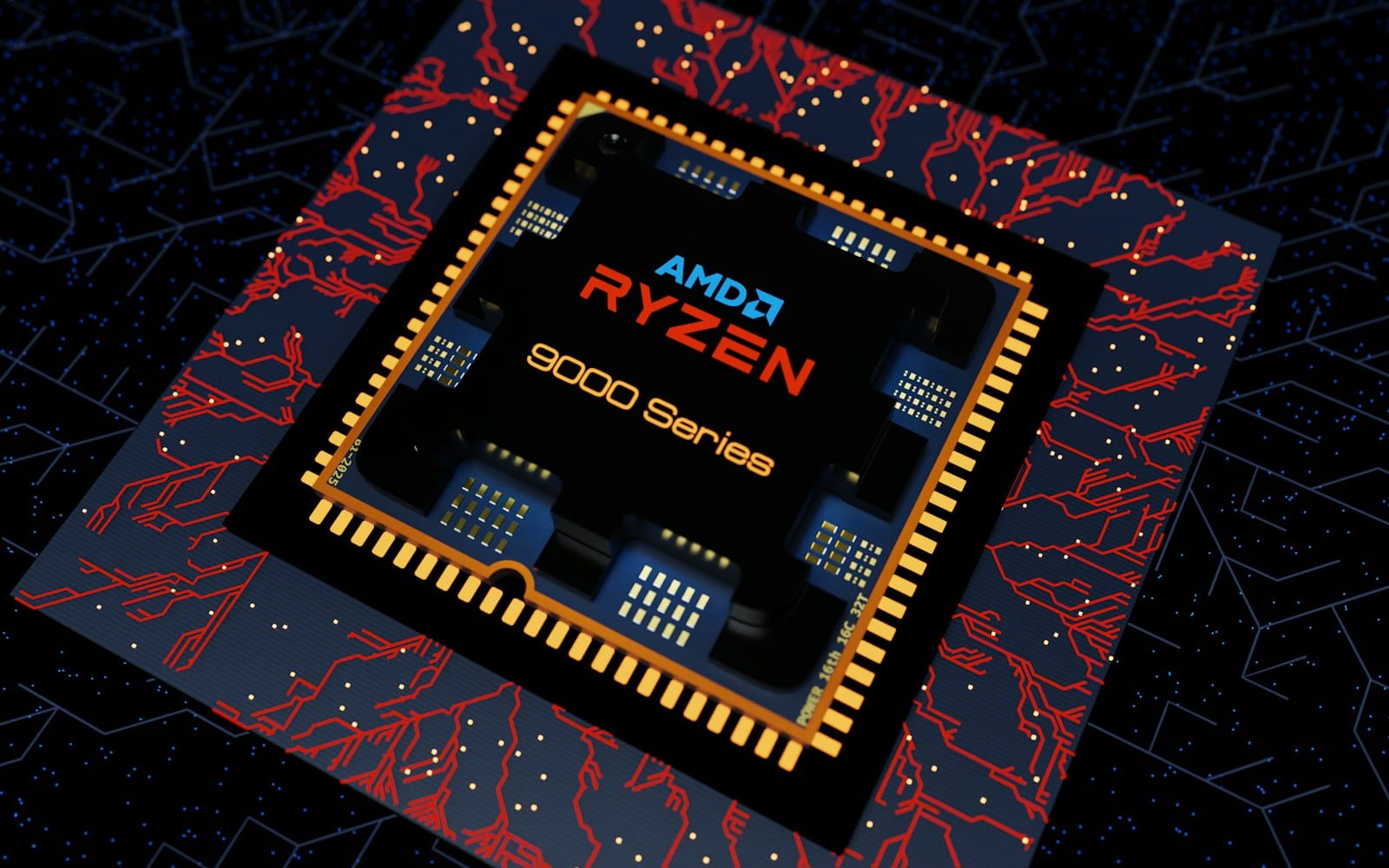
AMD is paying roughly $8.2 billion in its own stock for World Labs, the two-year-old spatial intelligence startup run by Fei-Fei Li, a company that was valued at about $1 billion when it came out of stealth in September 2024. Li, the Stanford professor behind ImageNet and the person half the internet calls the “godmother of AI”, becomes AMD’s executive vice president and chief scientist, reporting straight to Lisa Su.
The deal was announced on 28 September and is expected to close by the end of 2026, pending regulators. It is AMD’s second-largest acquisition ever, behind the roughly $50 billion Xilinx purchase completed in 2022. And here is the delicious bit: Nvidia was an investor in World Labs, so AMD’s biggest rival will be paid for its stake in AMD shares. Somewhere in Santa Clara, a man in a leather jacket is getting a stock certificate he did not ask for.
How World Labs got here
World Labs builds what the industry calls world models: AI systems that generate and reason about 3D spaces rather than text or flat images. Think of a chatbot that, instead of writing you a poem about a warehouse, builds you a navigable copy of the warehouse, with the conveyor belts moving. Its first product, Marble, generates persistent 3D environments from images, video or text prompts. Its newer Atlas model, according to SiliconANGLE, can build virtual replicas of factories from photos and supply the depth data a robot would need to find its way around.
The money arrived fast. Li and her co-founders (Justin Johnson, Christoph Lassner and Ben Mildenhall) emerged in September 2024 at a $1 billion valuation. In February 2026 they raised a further $1 billion at around $5 billion, from a list including Nvidia, AMD, Autodesk (which put in $200 million), Fidelity, Sea and Emerson Collective. We profiled that $1.23bn bet on spatial intelligence earlier this month, and the whole sector has been hoovering up cash, as we noted when the smart money left the chatbots for robots.
So the valuation went from $1 billion to $5 billion to $8.2 billion in two years, a 64% bump on February’s price in seven months. Not bad for a company that has never disclosed a revenue figure.
AMD was hardly a stranger. The two companies began a technical partnership last year covering model training and inference on AMD GPUs, and Li turned up as a guest at AMD’s CES keynote in January, per TechCrunch.
The numbers behind the deal
| Item | Figure |
|---|---|
| Price | ~$8.2bn, all stock |
| World Labs valuation, Sept 2024 | ~$1bn |
| World Labs valuation, Feb 2026 | ~$5bn |
| Total raised before sale | ~$1.23bn |
| AMD market value | ~$1tn |
| AMD Q2 2026 data centre revenue | $6.7bn (more than doubled year on year) |
| Nvidia Q2 FY2027 data centre revenue | $89.0bn |
| AMD’s largest deal | Xilinx, ~$50bn (2022) |
That Nvidia line is the whole story in one row. Nvidia’s data centre business did $89.0 billion in the quarter to 26 July, up 117%. AMD’s did $6.7 billion. AMD is growing fast, but it is chasing a company roughly thirteen times its size in the segment that matters, and Nvidia’s advantage has always been the software wrapped around the chips: CUDA, the Omniverse simulation platform and its own open-weight Cosmos world models, which robotics developers already use. AMD, until this week, had publicly offered text and video models and not much for the physical world.
What Su and Li say they are buying
Su’s pitch is that you cannot design the next generation of chips without knowing what the models on them will look like. “Building the compute platforms for the next generation of AI requires a deep understanding of how models are evolving,” she said in the official release, adding elsewhere that the combination would “strengthen the open AI ecosystem.”
Li’s version, from her own Substack post, leans on the hardware argument:
“Without having a focused hardware effort, AI is hobbled in efficiency. And scale.”
To be fair, that is a coherent thesis. World models are brutally compute-hungry, and a chipmaker with an in-house research lab that stress-tests its own silicon has a better shot at building what robotics customers need. It is also the sort of thesis you would write whether or not it were true, because the alternative sentence is “a trillion-dollar company offered us a lot of liquid stock”.
The sceptics
Pedro Domingos, professor emeritus at the University of Washington, was less charitable. “If you start a neolab with the declared goal of solving AI and quickly get acquired for a few billion, you weren’t serious to begin with,” he wrote, suggesting the company should have been called “Acquihire Bait”. (An acquihire is a deal done mostly to hire the people.)
The other awkward question is customers. AMD sells chips to OpenAI, Meta and the rest of the model builders, and owning a model lab edges it into their territory. Vamsi Boppana, AMD’s senior vice president of AI, told analyst Patrick Moorhead that competing with frontier labs was “not the intent at all”, per Stocktwits. Lovely arrangement, right up until a customer decides it would rather not fund its supplier’s research department.
The market shrugged. AMD shares, up more than 180% this year, were trading around $608 after the announcement and dipped 0.4% in overnight trading. Against a market value of roughly $1 trillion, $8.2 billion in stock works out to under 1% dilution, a rounding error AMD can print without breaking a sweat.
Bull, bear and neutral for AMD shareholders
Bull: AMD buys a world-class research team and a physical-AI platform for under 1% of its market value, paid in shares trading at a record-ish level rather than in cash. Data centre revenue more than doubled to $6.7 billion last quarter and Q3 guidance of $12.7 billion to $13.3 billion beat Street estimates. If robotics and simulation become the next big compute sink, AMD now has a credible answer to Cosmos and a famous name to recruit with.
Bear: The price is 64% above a valuation set seven months ago, for a company with no disclosed revenue. AMD already trades richly (GuruFocus puts its trailing price-to-earnings ratio above 150), so any execution slip gets punished; the stock fell sharply after its Q2 beat in August for exactly that reason. Nvidia’s data centre revenue is still about thirteen times AMD’s, and one lab will not rebuild the CUDA ecosystem. Customer conflict is a real risk too.
Neutral: At this size the deal barely moves AMD’s financials either way. What matters for the share price is still MI-series GPU volumes and hyperscaler orders; World Labs is an option on a market that might be huge in five years and is tiny today. Watch whether AMD releases World Labs models openly and whether they run best on AMD hardware.
Not investment advice, just a market watcher’s notes.
What this means
- World models are now serious enough for a chipmaker to pay $8.2 billion for one, which tells you where the next wave of AI spending is expected to go: robots, factories and simulation.
- Nvidia’s lead is software as much as silicon, and AMD is now buying research talent to close that gap.
- World Labs, backed by Nvidia among others, sold for roughly eight times its 2024 valuation in two years. Venture capital remains a lovely business if you are already rich.
- Expect more “neolabs” to be bought by hardware and cloud giants long before they “solve AI”.
If you would rather someone else read the SEC filings and press releases so you can get on with your life, our newsletter does the digging and tells you which AI tools are actually worth paying for.
Did you know: ImageNet, the dataset Li built in 2009, had more than 14 million hand-labelled images, and the 2012 contest win built on it is widely credited with kicking off the deep learning boom that AMD and Nvidia are now cashing in on.
Sources
- AMD Investor Relations: AMD to Acquire World Labs
- TechCrunch: AMD will acquire Fei-Fei Li’s World Labs for $8.2B
- CNBC: AMD acquiring Fei-Fei Li’s World Labs
- Bloomberg: AMD to Buy Fei-Fei Li’s World Labs for $8.2 Billion
- Fortune: AMD buys World Labs
- South China Morning Post: AMD buys Li Fei-Fei’s World Labs
- SiliconANGLE: AMD acquires world model developer World Labs
- Fei-Fei Li: To Seek a Newer World
- Nvidia Q2 FY2027 results (SEC filing)