In March, a Ukrainian-founded drone company called UFORCE was worth about a billion dollars. Eight months later it is worth six. On 12 November it raised 700 million dollars at a 6 billion dollar valuation, and the obvious question, the one the breathless funding coverage skips over, is the only one worth asking: what does a company like that actually make, and why is serious money suddenly willing to pay this much for it?
What UFORCE actually builds
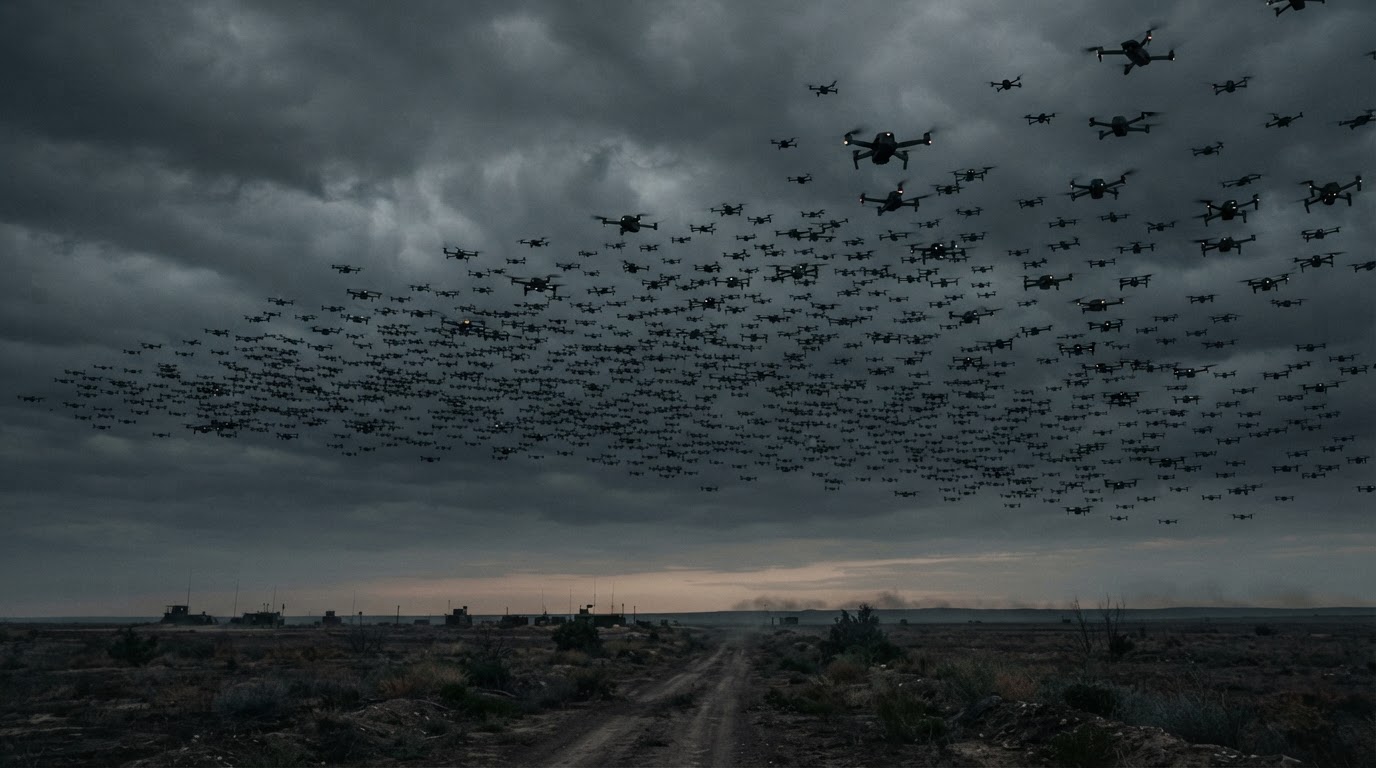
Not toys. UFORCE makes MAGURA uncrewed surface vessels, the sea drones that have been embarrassing the Russian navy in the Black Sea, along with NEMESIS aerial drones, LIUT uncrewed ground vehicles and PREDATOR turrets. It is headquartered in London with hubs in Kyiv and Washington. But the hardware is not really the product. The product is the command-and-control software that coordinates all of it: the brain that can fly a hundred drones at once rather than the drone itself. Anyone can bolt a grenade to a quadcopter. Making a thousand of them act as one is the hard part, and that is what the valuation is buying.
Who is writing the cheques
The round was co-led by Valor Equity Partners and, tellingly, the United Kingdom’s National Wealth Fund, with the US-Ukraine Reconstruction Investment Fund taking part. A government wealth fund putting public money into an attack-drone manufacturer is the detail that matters. This is not venture capitalists chasing a fad. It is states deciding that cheap autonomous weapons are now strategic infrastructure worth owning a piece of. Chief executive Oleg Rogynskyy said bookings had more than doubled over the past year, declined to give exact figures, and said the company had turned down offers at even higher valuations.
The number, in context
A six-fold jump in eight months sounds frothy until you line it up against the field. UFORCE at 6 billion dollars is still only about a third of Helsing, the German defence-AI firm that raised 1.8 billion at an 18 billion dollar valuation in July. The entire category is being repriced upward at speed, and the money is arriving all at once. This is a defence-AI gold rush, and the prospectors are governments.
Why now
Because Ukraine proved the thesis in the hardest possible laboratory. Cheap, software-defined, swarming systems have repeatedly beaten expensive legacy platforms, and every defence ministry in the West has watched it happen. The old primes sell billion-dollar kit that takes a decade to field. The new entrants sell cheap, autonomous kit that gets used this week. Investors have decided that is a structural shift rather than a wartime blip, and they are pricing it like one.
Bull, bear, neutral
Bull: battlefield-proven product, bookings more than doubling, governments as both backers and customers, and a rearmament cycle across Europe that is only getting started.
Bear: the valuation is running well ahead of any disclosed revenue, because the company will not disclose it. Defence spending is political and cyclical, and a business valued on war carries an awkward exposure to peace. Dual-use autonomy also invites the exact regulation campaigners are pushing for.
Neutral: UFORCE is private, so you cannot buy in directly anyway. The read-across is to listed defence names and the broader autonomy theme. Watch for disclosed revenue, a real order backlog, and whether the promised allied manufacturing actually scales.
Not investment advice. Do your own research.
What this means
The headline number is the least interesting thing about this deal. The interesting things are who is buying, a public wealth fund; what they are buying, coordination software rather than metal; and how fast the price is moving, six times in two quarters. When state money starts bidding up attack-drone startups, the category has crossed from niche to strategic. Whether the valuations survive contact with reality is the part nobody can tell you yet.
Edgar Friendly, calling the AI bullsh*t. More tools, more swearing: toptoolstack.com.
Did you know? UFORCE’s MAGURA sea drones cost a tiny fraction of the warships they have helped sink. The entire investment case for this corner of defence is that ratio, repeated across land, sea and air.
Sources: CNBC; DroneLife; Defence Industry Europe.